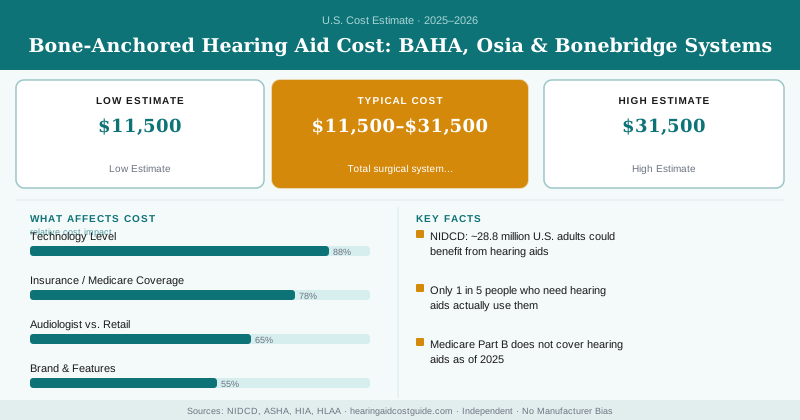
The most common question about bone-anchored devices is straightforward: what does a BAHA hearing aid cost, and will insurance help? The short answer: without insurance, a complete surgical BAHA system runs $11,500–$31,500. With Medicare or commercial insurance coverage — which is more likely for BAHAs than for conventional hearing aids — out-of-pocket costs can drop to $2,000–$6,000. Here’s the full breakdown.
A bone-anchored hearing aid doesn’t work the same way as a regular hearing aid — it bypasses the damaged outer and middle ear entirely. That’s not marketing language; it’s a fundamentally different signal pathway. Where a conventional hearing aid pushes amplified sound through your ear canal to the eardrum, a BAHA converts sound into vibrations and transmits them directly through your skull bone to the cochlea. Your outer ear is taken completely out of the equation.
For the right candidates, that distinction makes all the difference. If chronic ear infections prevent you from wearing an ear canal device, if you have a malformed ear canal, or if one ear has no useful hearing — conventional hearing aids can’t fix those problems. A BAHA can.
BAHA Full Cost Breakdown
| Component | Cost Range |
|---|---|
| Sound processor (Cochlear Baha 6 Max, Oticon Ponto 5) | $3,000–$6,000 |
| Osia 2 / Bonebridge processor | $4,000–$8,000 |
| Surgical implant (titanium abutment) | $3,000–$6,000 |
| Osia/Bonebridge magnetic implant | $5,000–$10,000 |
| Facility fee and anesthesia | $5,000–$10,000 |
| Audiological fitting and follow-up | $500–$1,500 |
| Softband system (non-surgical) | $2,500–$4,500 |
| Total surgical system (per side) | $11,500–$31,500 |
How Bone Conduction Actually Works
Sound waves cause vibrations. Normally those vibrations travel through your outer ear, eardrum, and middle ear bones (ossicles) before reaching the fluid-filled cochlea. A BAHA skips that path entirely. The external processor picks up sound and converts it into mechanical vibrations, which are transmitted through a titanium implant anchored in your skull bone — bypassing the entire outer and middle ear — directly to the cochlea.
The cochlea doesn’t know the difference. It just receives the vibration, converts it to neural signals, and sends them to your brain as it always has. That’s why BAHA works so well for conductive hearing loss: the cochlea is fine, it’s just not getting the signal through a damaged outer or middle ear.
Implanted vs. Non-Implanted Options
You don’t always need surgery. Non-implanted options exist — and they’re the right starting point for some patients.
Softband systems (Cochlear SoundArc, Ponto Softband): A processor is attached to a soft headband worn around the head. No surgery. Good for children under 5 who aren’t yet surgical candidates, and for adults trialing the technology. Cost: $2,500–$4,500. The tradeoff is sound quality — skin and soft tissue attenuate the bone conduction signal compared to a direct osseointegrated implant.
Surgical systems are where long-term users end up. There are two approaches:
- Traditional abutment: A titanium screw is implanted in the skull. A small post (abutment) protrudes through the skin behind the ear. The processor snaps onto the abutment. Cochlear’s Baha line and Oticon’s Ponto use this design.
- Magnetic implant (transcutaneous): The Cochlear Osia 2 and MED-EL Bonebridge use a fully implanted magnet under the skin. The processor attaches magnetically from outside — no exposed abutment. Many patients prefer this cosmetically, and there’s no skin-penetrating hardware to maintain.
The two dominant BAHA manufacturers in the US are Cochlear (Baha and Osia lines) and Oticon Medical (Ponto line). MED-EL makes the Bonebridge. From a consumer price standpoint, there’s no meaningful difference — all are covered as prosthetic devices when insurance approves them. Your surgeon and audiologist will recommend based on your anatomy, the implant design, and their clinical experience with each system.
Who’s a Candidate
BAHA candidacy isn’t about severity of hearing loss in the same way conventional aids are. It’s about the type and location of the problem:
- Single-sided deafness (SSD): One ear with no usable hearing. A BAHA on the deaf side picks up sound and routes it via bone conduction to the functioning cochlea on the other side.
- Conductive hearing loss: Blocked, malformed, or damaged outer/middle ear with a functioning cochlea. A BAHA bypasses the broken pathway.
- Mixed hearing loss: Combined conductive and sensorineural loss where a BAHA delivers more gain than a conventional aid can.
- Chronic ear infections: If you can’t wear an ear canal hearing aid due to persistent drainage, a BAHA is worn behind the ear with no canal component.
Insurance Coverage: The Medical Device Advantage
Here’s what separates BAHAs financially from conventional hearing aids. Insurance companies classify BAHAs as prosthetic devices or durable medical equipment — not hearing aids. That’s a huge distinction. Medicare explicitly excludes hearing aids from coverage. It doesn’t exclude prosthetic devices.
Medicare Part B covers BAHAs under the prosthetics benefit when medical necessity is established. The VA covers BAHAs for eligible veterans. Many commercial insurers that exclude conventional hearing aids will cover BAHAs under DME or surgical benefits.
Prior authorization is typically required. Your surgeon will submit documentation of your diagnosis and audiological test results. The approval rate for properly documented BAHA candidacy is high.
Don’t confuse “hearing aid coverage” with “BAHA coverage” when checking your insurance policy. Many plans that say they don’t cover hearing aids will cover a bone-anchored device under a different benefit category. Call your insurer and specifically ask about coverage for bone-anchored hearing systems as prosthetic devices (CPT code 69714/69717 for the implant, L8690 for the processor). The framing matters.
Processor Upgrades Over Time
The implanted titanium component lasts a lifetime. The external processor, like any electronic device, becomes outdated. Manufacturers typically release meaningful upgrades every 4–6 years. Processor upgrades don’t require surgery — you simply swap the external device.
Upgrade costs run $3,000–$6,000 for a new processor. Some insurers cover upgrades; others don’t. Check your plan’s durable medical equipment replacement policy. Cochlear and Oticon Medical both run upgrade programs that may offer patient pricing.
BAHA Hearing Aid Cost With vs. Without Insurance
The insurance picture for BAHAs is meaningfully better than for conventional hearing aids — here’s how costs compare:
| Coverage Scenario | Processor Cost | Surgery Cost | Estimated Out-of-Pocket |
|---|---|---|---|
| No insurance (self-pay) | $3,000–$9,000 | $8,000–$20,000 | $11,000–$29,000 |
| Medicare Part B (80% after deductible) | Covered as prosthetic | Covered under Part B | $2,300–$6,000 |
| Commercial insurance (covers as DME) | Varies by plan | Often covered | $1,500–$5,000 |
| VA (eligible veterans) | Usually fully covered | Usually fully covered | $0–$500 |
| Softband system only (no surgery) | $2,500–$4,500 | N/A | $2,500–$4,500 |
Key point: Medicare and many commercial insurers categorize BAHAs as prosthetic devices or durable medical equipment — not hearing aids. That distinction bypasses the hearing aid exclusion that blocks conventional device coverage. Always call your insurer and ask specifically about bone-anchored hearing systems using CPT codes 69714 or 69717 (implant) and HCPCS code L8690 (processor).
Before your audiologist appointment, review what Medicare covers for hearing aids — the BAHA benefit is distinct from standard hearing aid coverage and the comparison may surprise you. Patients who’ve already had a cochlear implant evaluation may also want to compare both implant pathways with their surgeon.
Frequently Asked Questions About BAHA Cost
How much does a BAHA hearing aid cost without insurance? Without insurance, a complete BAHA system (processor + surgical implant + facility/anesthesia fees) runs $11,500–$31,500. The Cochlear Baha 6 Max processor alone costs $3,000–$6,000; the Osia 2 or Bonebridge processors cost $4,000–$9,000. If you only need a non-surgical softband system, expect $2,500–$4,500.
Does Medicare cover the BAHA? Yes — Medicare Part B covers BAHAs as prosthetic devices, not as hearing aids. This is the critical distinction. You must meet your Part B deductible ($257 in 2025), then Medicare pays 80% of the approved amount. Medical necessity documentation from your surgeon and audiologist is required for prior authorization.
How long does a BAHA processor last? The titanium implant is permanent — it lasts a lifetime. The external sound processor typically needs upgrading every 4–6 years as technology advances. Processor upgrades cost $3,000–$6,000 and don’t require surgery. Some insurers cover upgrade costs under DME replacement benefits; check your specific plan.
The Bottom Line
If you have single-sided deafness, conductive hearing loss, or chronic ear conditions that prevent conventional hearing aid use — a BAHA is worth a serious evaluation. The surgery is outpatient, recovery is fast, and the insurance picture is genuinely better than for conventional hearing aids. Start with an audiogram to confirm candidacy; the test results determine everything that comes next.
Frequently Asked Questions
Recovery from the titanium abutment procedure (traditional BAHA) is usually straightforward — most adults go home the same day and return to normal activity within a week. There's a small incision behind the ear and some swelling, but pain is generally mild. The Osia and Bonebridge systems use a fully implanted magnet instead of an abutment, which many patients prefer cosmetically. Full osseointegration (the bone fusing around the implant) takes 3–6 months before the processor is attached and activated.
Medicare Part B covers BAHAs as prosthetic devices — not as hearing aids — which is a critical distinction. This means the BAHA processor and surgical implant are covered under Medicare's durable medical equipment and prosthetics benefit rather than the hearing aid exclusion. Qualifying conditions include single-sided deafness, conductive hearing loss, and mixed hearing loss. You'll need to meet your deductible, then Medicare pays 80% of the approved amount. Check with your specific plan, as coverage details vary by supplier and region.
For adults, no — a softband or headband-mounted processor doesn't deliver the same sound quality as a surgically osseointegrated implant. The bone transmission is attenuated through skin and soft tissue, reducing high-frequency response. That said, softbands are genuinely useful for kids under 5 who aren't surgical candidates yet, for trialing the technology before committing to surgery, and for adults with medical reasons to avoid surgery. Some adults with mild conductive loss find the softband acceptable long-term.