Most parents assume early intervention will cost a fortune. Wrong — at least, not the way you’d expect. For children under three, much of it is free or income-based by federal law, and the families who end up overpaying usually do so because they never found out what they were entitled to.
Here’s the catch: “free” doesn’t mean automatic. You have to know the system to use it. Let’s walk through what early intervention actually costs and where the money comes from.
What “Early Intervention” Includes
When a baby is identified with hearing loss, early intervention (EI) is the bundle of services that follows — therapy, family coaching, audiology support, and device management — designed to keep language development on track during the most critical window.
| Service | Cost (before EI funding) |
|---|---|
| Initial developmental evaluation | $300–$1,500 |
| Speech-language/listening therapy (per session) | $100–$250 |
| Deaf/hard-of-hearing specialist home visits | $75–$200 per visit |
| Family sign language or AV training | $50–$150 per session |
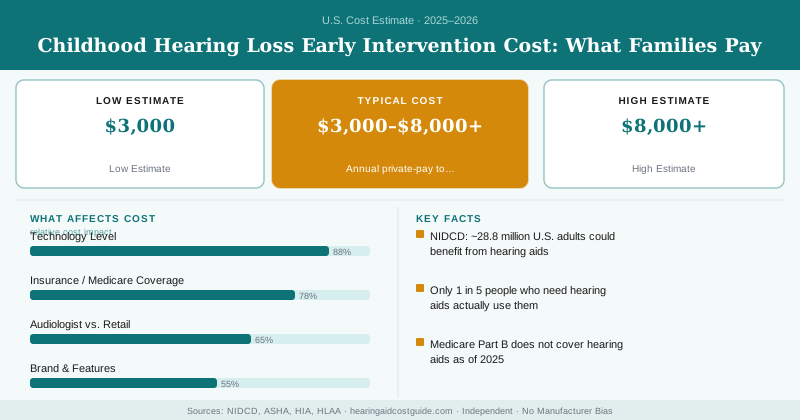
| Annual private-pay total (if uncovered) | $3,000–$8,000+ |
Those are the raw prices. Now here’s why most families don’t pay them.
The Federal Backbone: IDEA Part C
Under Part C of the Individuals with Disabilities Education Act (IDEA), every state runs an early-intervention program for children from birth to age three with developmental delays or diagnosed conditions — and permanent hearing loss qualifies. The U.S. Department of Education reports that hundreds of thousands of infants and toddlers receive Part C services nationwide each year.
The funding rules vary by state. Some provide all services at no cost to families. Others use a sliding fee scale based on income, and many bill private insurance or Medicaid first.
The single most important phrase to remember is “IDEA Part C.” Ask your pediatrician or birthing hospital for a referral to your state’s early-intervention program. Evaluation under Part C is free in every state, and many services that follow are too.
Why Speed Matters More Than Money
The CDC’s EHDI initiative built its whole framework around a “1-3-6” goal: screened by 1 month, diagnosed by 3 months, enrolled in intervention by 6 months. The reason is brutal biology — the brain’s language-learning window is widest in the first few years, and children who start intervention by six months consistently catch up to hearing peers far better than those who start late.
Don’t wait for a perfect diagnosis to start. Provisional enrollment in early intervention while testing continues is common and smart. Every month of delay is harder to recover developmentally than financially.
Where the Out-of-Pocket Costs Hide
Even with Part C, families hit a few real expenses:
- The child’s personal hearing aids usually aren’t covered by EI — that’s a separate track. See our children’s hearing aids cost guide.
- Once your child turns three, services shift from Part C to school-based Part B, and the structure changes.
- Some specialized therapies have waitlists, and families sometimes pay privately to start sooner.
If hearing aids are part of the plan, our pediatric hearing aid cost breakdown covers what to expect, and the newborn hearing screening cost guide explains the step that usually starts the whole journey.
How to Keep Your Costs Down
- Get the Part C referral the moment loss is confirmed — don’t let the hospital “follow up later.”
- Ask specifically whether your state charges family fees and whether they’re income-based.
- Keep every evaluation report; you’ll need them when transitioning to school services at age three.
- If you’re on Medicaid, services are typically fully covered — confirm enrollment early.
A good pediatric audiologist will often help families navigate the Part C referral, since they work with the program constantly.
Bottom Line
Early intervention can be nearly free or run several thousand a year — the difference is almost entirely whether you tap into IDEA Part C correctly. Start early, ask about your state’s fee structure, and treat the paperwork as seriously as the therapy itself.
Frequently Asked Questions
Early intervention costs range from $0 to $5,000+ annually depending on your state and family income. For children under three, federal law requires states to provide free or income-based services, meaning many families pay nothing out-of-pocket if they qualify and enroll in their state's early intervention program.
Most early intervention services for children under three are covered by state programs at no cost to families, but private insurance and Medicaid may cover additional services or evaluations not included in the state program. Out-of-pocket costs typically only occur if families choose private audiology services outside their state's early intervention system or exceed income eligibility limits.
Once your child is referred to your state's early intervention program, evaluations and service initiation typically begin within 30 days, though this timeline varies by state. The key to minimizing costs is enrolling promptly, as many families overpay by pursuing private services before exploring their free or subsidized state program options.