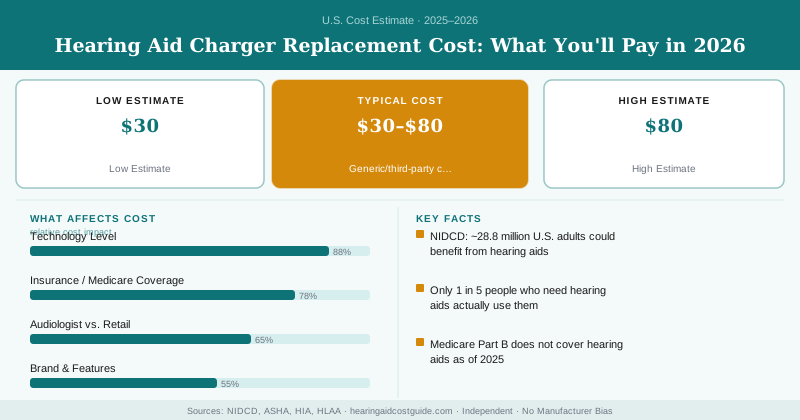
Your charger died, not your hearing aids. That’s the good news. The bad news? A replacement charger can cost more than you’d expect — anywhere from $50 to $300 depending on the brand and whether it’s a basic dock or a fancy portable case with its own battery.
Rechargeable models have taken over fast. The Hearing Industries Association reported that lithium-ion rechargeable devices made up the majority of new hearing aid units shipped in the U.S. in 2023, and that share keeps climbing. More rechargeables means more chargers — and more people searching for a replacement when one breaks or gets left in a hotel room.
What a Replacement Charger Costs
| Charger Type | Cost |
|---|---|
| Basic charging dock (Jabra, Rexton) | $50–$120 |
| Standard branded charger (Phonak, Oticon, Signia) | $100–$200 |
| Portable charging case with built-in battery | $150–$300 |
| Premium “smart” charger with drying function | $200–$350 |
| Generic/third-party compatible charger | $30–$80 |
The portable cases are the pricey ones. They hold a charge of their own, so you can top off your aids for two or three days without finding an outlet. Handy for travel, but you pay for the convenience.
Why Chargers Aren’t Cheap
It feels like it should cost twenty bucks, right? It’s just a plastic dock. But these chargers are tuned to your specific model — they have contact points positioned for your aids, charging circuitry matched to the lithium-ion cells, and often firmware that talks to the device. That engineering, plus brand markup, pushes the price up.
A few things bump the cost higher:
- Brand lock-in. A Phonak charger won’t work with Oticon aids. You’re stuck buying from your manufacturer or an authorized seller.
- Built-in batteries. Portable cases need their own power cell, which adds cost.
- Drying features. Some chargers gently dehumidify while charging, which protects your investment but raises the sticker.
Can You Use a Generic Charger?
Sometimes. Third-party chargers exist for popular models and run $30–$80. They can work fine, but there’s risk — a mismatched charger can undercharge, overheat, or void your warranty. I’d only go generic if you’ve confirmed compatibility and you’re okay losing manufacturer support.
Never use a USB-C phone charger or random cable to power your hearing aid charger unless the manufacturer says it’s safe. The voltage may technically fit, but improper power delivery can damage the lithium-ion cells inside your aids — turning a $100 problem into a $3,000 one.
Is It Covered Under Warranty?
Maybe. If your charger fails from a defect within the warranty window, the manufacturer usually replaces it free. Lose it or break it yourself, though, and you’re paying out of pocket. Check whether your plan includes accessories — many hearing aid warranty packages cover the device but treat the charger as a separate purchase.
If your aids are out of warranty entirely, weigh the charger cost against the device age. A $200 charger for five-year-old aids might not be worth it if you’re due for an upgrade anyway. See how long hearing aids last before you spend.
Where to Buy a Replacement
Buy from your audiologist or the manufacturer’s authorized store first — you’ll get the exact charger for your model and keep your warranty intact. Expect to pay $50–$200 for a standard dock and up to $300 for a portable case with a built-in battery. Generic chargers can save money but carry real risk to your devices.
Your best options, in order:
- Your audiologist. They’ll order the right one and often have stock on hand.
- Manufacturer website. Authorized, guaranteed fit, full price.
- Major retailers (Costco, Sam’s Club). If you bought aids there, replacements are cheap.
- Amazon/eBay third-party. Cheapest, riskiest — verify compatibility.
How to Avoid Replacing It Again
A few habits keep your charger alive longer. Keep the contact points clean and dry — corrosion is the silent killer. Don’t yank the cable; pull from the plug. And store it somewhere stable so it doesn’t get knocked off a nightstand.
If you’re shopping for a whole new rechargeable system, factor the charger into your rechargeable hearing aid cost math. Chargers are also worth budgeting alongside other hearing aid accessories you’ll replace over the life of your devices.
The Bottom Line
A replacement charger is annoying but rarely catastrophic. Budget $50–$200 for a standard one, more for portable cases. Buy authorized, keep it clean, and don’t let a $150 charger push you into prematurely buying new hearing aids you don’t need yet.
Frequently Asked Questions
A replacement hearing aid charger typically costs between $50 and $300, depending on the brand and type. Basic charging docks run on the lower end, while portable charging cases with built-in batteries can reach $300 or more. Premium brands and proprietary systems often command higher prices than generic or aftermarket alternatives.
Most health insurance plans and Medicare do not cover replacement chargers, treating them as accessories rather than essential medical devices. You'll typically pay the full out-of-pocket cost, though some manufacturers offer warranties that may cover charger replacement within the first 1–3 years. Check your specific policy and manufacturer warranty, as coverage varies significantly by plan and brand.
Yes, aftermarket and third-party chargers are available for many hearing aid models and typically cost $50–$100, significantly less than manufacturer replacements. Before purchasing a third-party option, verify compatibility with your specific hearing aid model to avoid damage or poor charging performance. Some users find third-party chargers work reliably, while others prefer manufacturer chargers to ensure warranty protection and optimal battery longevity.