The $200 quote to replace a tiny speaker the size of a grain of rice sounds absurd — until you understand what that little component does. The receiver is the speaker that sits in your ear canal on a RIC (receiver-in-canal) hearing aid, and when it dies, your aid goes silent or crackly on that side.
Receiver replacement typically runs $50 to $250 per unit. The good news: it’s one of the most common repairs, audiologists do it routinely, and it’s far cheaper than replacing the whole device.
What Receiver Replacement Costs
| Service | Cost |
|---|---|
| Receiver wire/speaker unit (part only) | $50–$150 |
| Receiver replaced in-office by audiologist | $75–$250 |
| Receiver replacement under warranty | $0 |
| Manufacturer lab repair (includes receiver) | $150–$400 |
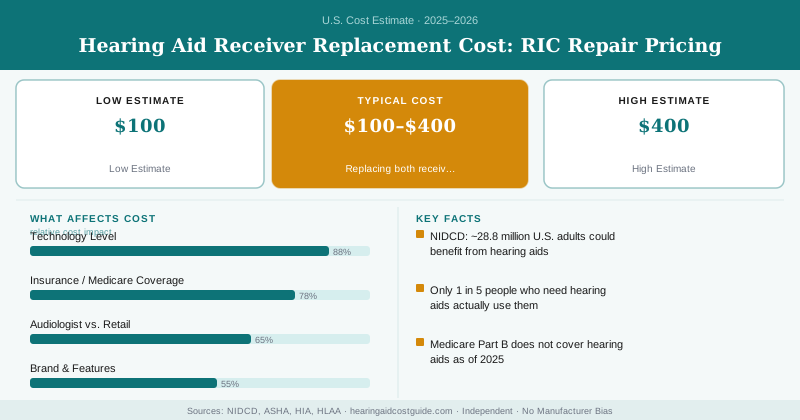
| Replacing both receivers (pair) | $100–$400 |
Most of the cost is the part plus a few minutes of skilled labor. A trained audiologist can swap a receiver in the office in well under ten minutes if they stock your model.
Why Receivers Fail
The receiver lives in the warmest, wettest, waxiest place it could possibly be — your ear canal. That’s a brutal environment for delicate electronics. Earwax clogs the speaker port, moisture corrodes the internals, and daily wear-and-tear eventually takes its toll.
Common failure causes:
- Earwax intrusion — the number one killer. Wax migrates into the receiver and muffles or kills the sound.
- Moisture and humidity — sweat and condensation corrode the speaker.
- Physical damage — dropping the aid or yanking the wire.
The receiver-in-canal style has become dominant for good reason — it’s comfortable and natural-sounding. You can read more about that design in our guide to the receiver-in-canal hearing aid and what it costs new.
How to Know It’s the Receiver
If one aid suddenly goes dead, sounds muffled, or crackles while the other works fine, the receiver is a prime suspect. Before you panic, try replacing the wax guard — a clogged guard mimics a dead receiver and costs cents to fix. If a fresh wax guard doesn’t help, the receiver likely needs replacing.
Don’t poke cleaning tools deep into the receiver port to dig out wax. You can shove debris further in or puncture the speaker membrane, turning a $1 wax-guard fix into a $200 receiver replacement. Replace the wax guard instead, and let your audiologist handle anything deeper.
Is It Covered Under Warranty?
Often, yes — at least early on. Manufacturer warranties usually cover receiver failures from defects, and many also cover wax-and-moisture damage for the first one to three years. Check your coverage before paying out of pocket. Our hearing aid warranty breakdown explains what’s typically included.
Past warranty, you’ll pay the part-plus-labor rate. Still cheap compared to a full hearing aid replacement.
A failed receiver costs $50–$250 to replace, and it’s a routine in-office repair for most audiologists. Always rule out a clogged wax guard first — it’s the cheapest possible fix and mimics receiver failure. If your aids are still under warranty, the swap may cost you nothing.
How to Make Receivers Last Longer
Prevention is dirt cheap compared to replacement. Three habits do most of the work:
- Change wax guards regularly — this is the single best thing you can do.
- Dry your aids nightly in a dehumidifier or drying kit to fight moisture.
- Wipe down receivers daily as part of basic hearing aid cleaning.
Receivers are wear items — the ASHA recognizes regular maintenance as essential to keeping hearing aids functioning, and the NIDCD estimates roughly 28.8 million U.S. adults could benefit from hearing aids, many of whom underuse them partly due to upkeep frustration. A little daily care prevents most receiver failures.
The Bottom Line
A dead receiver isn’t a dead hearing aid. For $50–$250 — or nothing under warranty — you can get your sound back fast. Rule out the wax guard first, keep your aids dry, and you’ll stretch the time between replacements. When repairs start piling up, that’s the signal to weigh a new pair instead. Compare against full hearing aid pricing before you decide.
Frequently Asked Questions
Receiver replacement typically costs $50 to $250 per unit, depending on your hearing aid brand, model, and whether you go to the manufacturer or an independent audiologist. Some high-end RIC models may cost toward the upper end of that range, while basic replacements can fall closer to $50–$100.
Most health insurance plans do not cover hearing aid repairs or replacements, including receiver repairs, as hearing aids are typically classified as durable medical equipment with limited or no coverage. You should contact your insurance provider directly, but expect to pay out-of-pocket for the full $50–$250 replacement cost in most cases.
Many audiologists can replace a receiver in-office within 24–48 hours, though some offices offer same-day service if they have the part in stock. If your audiologist must order the receiver from the manufacturer, expect 1–2 weeks for the repair to be completed.