42% of the workforce now spends part of the day on the phone or in calls, and for people with hearing loss, that line is where the job gets hard. A muffled caller. A “sorry, can you repeat that?” loop. The fix is a hearing aid that streams the call straight into both ears — and it costs $1,500–$5,500 per pair.
If your job lives on the phone — sales, support, scheduling, remote work — this is the one feature you should optimize for above all others.
Phone-Work Hearing Aid Costs
| Option | Cost | Notes |
|---|---|---|
| OTC with Bluetooth | $999–$1,500/pair | Basic call streaming, mild-moderate |
| Costco rechargeable | $1,499–$2,199/pair | Reliable streaming, 3-yr care |
| Mid prescription | $2,500–$4,000/pair | Hands-free, dual-ear streaming |
| Premium prescription | $4,500–$5,500/pair | Best speech clarity, AI noise reduction |
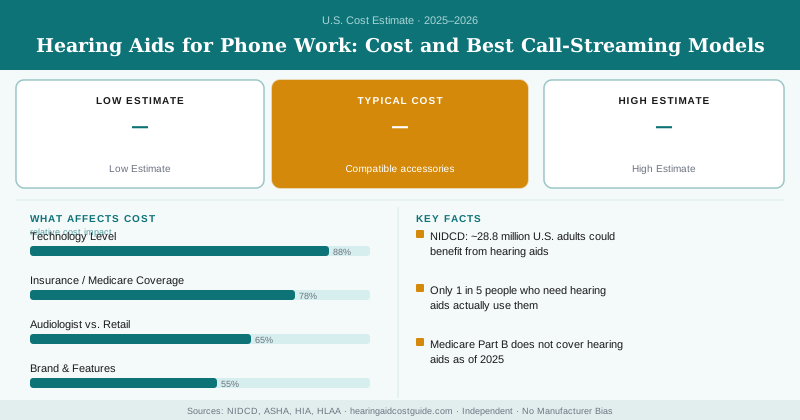
| Compatible accessories | $0–$300 | TV/phone streamers if needed |
Why Streaming to Both Ears Wins
Holding a phone to one ear gives that ear the signal and leaves the other guessing. Direct Bluetooth streaming sends the caller’s voice into both hearing aids at once. Suddenly speech clarity jumps, because your brain hears with both ears the way it’s designed to. For phone-heavy roles, this single change is transformative.
Most modern aids stream calls from iPhones natively, and Android support is rapidly expanding. Some premium models even act as a hands-free headset — answer with a tap, talk through the aid’s microphone, never touch the phone. Our Bluetooth hearing aid cost guide breaks down which platforms work with which devices.
For phone-heavy jobs, prioritize dual-ear Bluetooth call streaming over any other feature. Hearing the caller in both ears, not just one pressed against a handset, is the biggest clarity upgrade you can buy — and it’s available from $999 OTC up to $5,500 premium prescription.
Hands-Free Is Worth Paying For
If you’re typing notes during calls all day, a hands-free model that uses the hearing aid’s own mic to capture your voice is a quiet productivity win. No headset, no holding the phone, no neck cramp. This capability is strongest in premium and some mid-tier prescription devices. For lighter call volume, basic streaming on a Costco or OTC device is plenty.
The NIDCD estimates about 28.8 million U.S. adults could benefit from hearing aids, and many work jobs where mishearing a phone number or an address has real consequences. Treating the loss isn’t just comfort — it’s accuracy.
Battery Life and the Workday
Streaming drains battery faster than passive listening. If you’re on calls for hours, a rechargeable hearing aid with strong streaming endurance matters — look for models rated for a full day even with heavy Bluetooth use. A midday charging case can bridge marathon shifts.
Workplace Coverage and Accommodations
Two things to check before paying full price. First, your health plan or FSA/HSA may cover part of the cost. Second, under the ADA, employers must provide reasonable accommodations for hearing loss — sometimes including assistive devices or compatible phone systems. It’s worth a conversation with HR.
A 2021 Hearing Industries Association report tied higher device satisfaction directly to connectivity features, and for phone workers, connectivity is the whole point. Buy for it.
Not every “Bluetooth” hearing aid handles two-way calls equally. Some only stream audio in (you still talk into the phone), while others are fully hands-free. Confirm exactly how the model handles calls before buying — and test it on a real work call during your trial period. The difference between “streams audio” and “true hands-free” is huge for an 8-hour phone shift.
Where to Start
Get a baseline first. Our hearing test cost guide explains the audiogram, and an audiologist visit lets you test call streaming on your own phone before you commit.
For mild-to-moderate loss on a budget, a Bluetooth-capable OTC hearing aid at $999–$1,500 covers basic call streaming. For heavier call loads or more complex loss, prescription devices deliver cleaner speech and true hands-free use. Compare everything in our hearing aid cost overview, and make call streaming your top priority.
Frequently Asked Questions
Hearing aids with direct call-streaming capability typically cost $1,500–$5,500 per pair in 2025. Premium models from major manufacturers like Phonak, Widex, and ReSound that offer bilateral streaming to both ears fall in the $3,500–$5,500 range, while budget-friendly options with basic streaming start around $1,500–$2,500 per pair.
Medicare does not cover hearing aids, though some Medicare Advantage plans offer limited coverage of $0–$2,000 annually. Private health insurance rarely covers hearing aids, but you may qualify for a Health Savings Account (HSA) deduction or employer assistance programs; out-of-pocket costs typically remain $1,500–$5,500 after any employer contribution.
The fitting process typically takes 1–2 weeks from initial audiologist appointment to wearing your devices. This includes a hearing test (1 hour), device ordering (3–7 days), and a fitting appointment where the audiologist programs call-streaming features and tests them on your phone (1–2 hours).