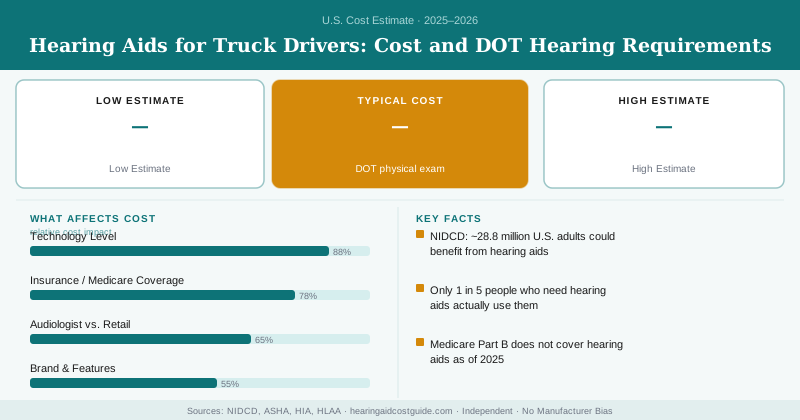
In 2010 this cost a CDL driver his career. Today it doesn’t. The Federal Motor Carrier Safety Administration’s hearing exemption program changed everything, and drivers who couldn’t pass the DOT hearing test unaided now keep driving with hearing aids. The medical hurdle is lower than most truckers fear — but the gear still costs $1,500–$5,000 per pair.
Long-haul driving is loud, lonely, and hard on your ears. Diesel rumble, wind noise, and decades of road time add up. Here’s what truckers actually need to spend and know.
What Truck Drivers Pay
| Option | Cost | Notes |
|---|---|---|
| OTC hearing aids | $799–$1,500/pair | Mild-moderate loss, no exam |
| Costco rechargeable | $1,499–$2,199/pair | Durable, good value, 3-yr care |
| Mid prescription RIC | $2,500–$4,000/pair | Custom fit, noise programs |
| Premium prescription | $4,000–$5,000/pair | Best wind/road noise handling |
| DOT physical exam | $50–$150 | Required to keep CDL |
The DOT Hearing Standard, Plainly
Here’s the rule. To drive commercially, you must hear a forced-whisper at 5 feet in your better ear, OR have an average hearing loss of 40 dB or less at 500, 1000, and 2000 Hz in the better ear. The crucial part: you’re allowed to use a hearing aid to meet that standard. If aided hearing passes, you pass.
And if you don’t pass even with aids? The FMCSA’s hearing exemption program lets many drivers keep their CDL through a documented application. Research the agency has cited found that drivers with hearing loss were not at higher crash risk — which is why the exemption exists.
You can keep your CDL with hearing aids. The DOT standard allows aided testing, and the FMCSA hearing exemption covers drivers who still fall short. Budget $1,499–$2,500 for a durable rechargeable pair, and bring them to your DOT physical so the examiner tests you aided.
Built for the Cab
A truck cab is a tough environment: temperature swings, dust, vibration, and constant low-frequency engine noise. You want a sealed, rugged device with a solid IP rating. A rechargeable hearing aid avoids fumbling with tiny batteries while driving and has no battery door to let dust in.
OSHA sets the workplace noise limit at a 90 dBA 8-hour average, and while a modern cab is quieter than the engine bay, older trucks and open windows on the highway can push exposure higher over a long career. The NIDCD reports that about 28.8 million U.S. adults could benefit from hearing aids — and occupational noise is a major reason drivers land in that group.
Hearing the Road and the Phone
Truckers live on their phones — dispatch, family, navigation. Bluetooth aids stream calls and GPS directions straight to your ears, hands-free and legal in most states. Our Bluetooth hearing aid cost guide covers which models do this well. Just keep ambient awareness on so you still hear horns and emergency vehicles.
Get Tested Before the Physical
Don’t walk into your DOT exam guessing. Get a baseline first. Our hearing test cost guide explains the audiogram, and an audiologist visit gets your aids fitted and verified before the examiner ever tests you. Walking in already aided and passing is far less stressful than discovering a problem on exam day.
Don’t try to “wing” the DOT hearing test if you know your hearing is borderline. Failing unaided can flag your medical card and create paperwork headaches. Instead, get fitted with hearing aids in advance, then take the exam aided. The standard explicitly permits it, and a clean aided result keeps your card and your route on schedule.
Budget vs. Professional Route
For mild-to-moderate loss and a tight budget, an OTC hearing aid at $799–$1,500 can pass the DOT standard for many drivers — verify it with an audiogram first. For moderate-to-severe loss, or if you want noise programs tuned for highway driving, go prescription.
Either way, factor durability into the price. A cheaper aid that quits after a year of cab dust and heat costs more in the long run. Compare the full range in our hearing aid cost overview before you decide.
Frequently Asked Questions
Hearing aids for truck drivers typically cost $1,500–$5,000 per pair, depending on the model, features, and noise-reduction technology needed for cab environments. Premium models with advanced durability and wind-noise filtering can reach the higher end of this range, while basic models may start around $1,500.
Most standard health insurance plans cover 0–50% of hearing aid costs, with many leaving drivers with $1,000–$3,000 out-of-pocket expenses after insurance. Medicare covers hearing aids only in limited circumstances, and most commercial truck driver plans do not include hearing aid coverage, making out-of-pocket purchase the norm for most CDL holders.
The typical process takes 2–4 weeks from initial audiogram to fitted, working hearing aids, though some providers can expedite to 1–2 weeks if needed. Once fitted and functional, you can schedule a retest with the DOT medical examiner to regain or maintain your CDL certification.