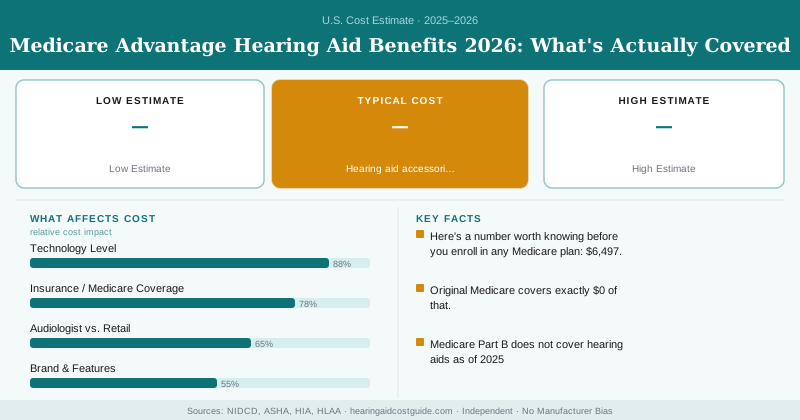
Here’s a number worth knowing before you enroll in any Medicare plan: $6,497. That’s what AARP research puts as the average out-of-pocket cost for a pair of hearing aids. Original Medicare covers exactly $0 of that. It hasn’t since 1965, and Congress hasn’t changed it.
Medicare Advantage is where the coverage story actually gets interesting — and complicated. Not every MA plan covers hearing. Of those that do, the allowances range from barely useful to genuinely helpful. Here’s how to figure out what you’d actually get.
Original Medicare vs. Medicare Advantage: The Key Difference
| Coverage Type | Original Medicare (Parts A & B) | Medicare Advantage (Part C) |
|---|---|---|
| Routine hearing exam | Not covered | Often covered (1–2/year) |
| Diagnostic hearing exam | Covered if MD-ordered | Covered |
| Hearing aids | Not covered | Varies by plan ($0–$2,500) |
| Hearing aid batteries | Not covered | Not covered (most plans) |
| Audiologist fitting | Not covered | Often included with aid benefit |
| Hearing aid accessories | Not covered | Not covered (most plans) |
Original Medicare does cover one audiological evaluation per year — but only when a physician orders it for a specific medical complaint, not as a routine hearing check. That covers your audiogram. It covers nothing else hearing-related.
What Medicare Advantage Hearing Benefits Actually Look Like
Medicare Advantage plans are sold by private insurers and the specific benefits vary by plan and by county. That’s the frustrating part. There’s no standard “Medicare Advantage hearing benefit” — you have to look up each plan individually.
That said, here are the most common benefit structures you’ll see in 2026:
Allowance model: The plan gives you a fixed dollar amount per year or per two years toward approved hearing aids. Common allowances run $500–$2,500 per pair. You can choose any aid at or below that amount at no cost, or pay the difference above it out of pocket.
Network-based model: You can only use the plan’s contracted hearing provider (often HearingLife, TruHearing, or a similar third-party hearing network). Devices are limited to what that network offers. Selection is typically narrower than a private audiology practice, but the negotiated pricing can be favorable.
Copay model: Some plans cover hearing aids with a copay structure — say, 80/20 coinsurance after a deductible — similar to how they handle other medical devices.
Many MA plans outsource their hearing benefits to third-party networks like TruHearing or HearingLife rather than managing them directly. If your plan uses TruHearing, you’ll need to call TruHearing directly (not your insurer) to access your benefit. These networks negotiate device prices: Phonak, ReSound, Starkey, Signia, and Widex models are typically available at below-retail rates. The catch: you can’t use an independent audiologist and still access the benefit — it’s network-only.
What’s Typically Excluded (Even With Good Coverage)
This part matters as much as what’s covered. Even a generous $2,000 hearing aid allowance often excludes:
- Batteries: Zinc-air batteries for non-rechargeable aids run $50–$150/year per ear. No plan covers them.
- Wireless accessories: TV streamers, remote microphones, and companion apps with extra hardware typically cost $100–$400 each — all out of pocket.
- Extended warranties: If the plan covers a 1-year manufacturer warranty, a 3-year extended warranty is your expense.
- Aids above the allowance: If you want a premium device that costs $3,500 per pair but your allowance is $1,500, you pay $2,000 difference. This is where people get surprised.
- Second pair: Most plans provide one pair every 1–3 years. A replacement pair outside that window costs you retail price.
Which MA Plans Have Hearing Benefits in 2026?
The five largest Medicare Advantage insurers — UnitedHealthcare, Humana, CVS/Aetna, Anthem/Elevance, and BCBS affiliates — all offer at least some plans with hearing benefits. But “some plans” is doing a lot of work in that sentence. Within each insurer, you might find plans with $0 hearing coverage and plans with $2,000+ coverage, side by side, in the same county.
According to the Kaiser Family Foundation, about 86% of Medicare Advantage enrollees were in plans that offered some hearing benefit in 2024 — but the median allowance was only $600 per pair per year. That covers a basic OTC-tier device, not a premium prescription hearing aid.
The only reliable way to find what’s available where you live: medicare.gov/plan-compare. Enter your ZIP code, filter by “Hearing,” and compare allowances directly. It takes about 10 minutes and is the only source with real 2026 data for your specific county.
Medicare Advantage plans change benefits every January 1. A plan that covered $1,500 toward hearing aids in 2025 might reduce that to $750 in 2026 — or eliminate the benefit entirely. Always recheck your plan’s Evidence of Coverage document each October during open enrollment. Don’t assume last year’s benefits carried over unchanged.
How to Find and Maximize Your Hearing Benefit
Pull your plan’s Evidence of Coverage (EOC) — either from your insurer’s website or call member services. Search for “hearing” to locate the specific benefit section.
Note whether it’s annual or biennial — a $1,200 annual allowance is worth $2,400 over two years; a $2,000 biennial allowance is worth the same. They’re not the same.
Find out which network you must use — ask specifically whether you can see an independent audiologist or if the benefit only applies at plan-contracted providers.
Ask about carry-forward rules — some plans let unused hearing allowance carry into a second year; most don’t.
Compare out-of-pocket costs before switching plans — a plan with better hearing benefits might have higher premiums, worse drug coverage, or narrower provider networks. Run the full math.
When MA Hearing Benefits Aren’t Enough
Even the most generous MA hearing benefit — $2,500 per pair — covers maybe 40–60% of a premium hearing aid’s cost. For mild losses, it might cover the entire cost of a mid-range device. For people with complex hearing profiles who need premium directional processing, rechargeable systems, or specialized programming, it’s still a significant cost-share situation.
In that case, stack your MA benefit with HSA/FSA funds if you have them, and ask your audiologist about patient assistance programs. Phonak, Starkey, and Oticon all maintain programs for lower-income patients — and your audiologist has usually navigated those applications before.
Frequently Asked Questions
Original Medicare (Parts A and B) does not cover hearing aids or routine hearing exams in 2026 — this exclusion has existed since Medicare was created in 1965. However, many Medicare Advantage (Part C) plans do include hearing aid benefits, typically offering an annual or biennial allowance of $500–$2,500 per pair toward approved hearing aids purchased through the plan's network.
Plans with the most generous hearing aid allowances in 2026 include UnitedHealthcare's HearingLife network partnerships (up to $1,500–$2,500 per pair), Humana's hearing benefit with $1,000–$2,000 allowances, and AARP MedicareComplete plans. Benefits vary significantly by county and plan tier. Use Medicare's Plan Finder at medicare.gov to compare plans by ZIP code.
Even plans with hearing benefits typically exclude hearing aid batteries, cleaning and maintenance kits, wireless accessories (TV streamers, remote microphones), extended warranties purchased separately, and hearing aids that exceed the plan's annual allowance. You pay 100% out of pocket on excluded items.