A bottle of “clinical strength” tinnitus relief pills can run you $49.99 — and the label promises to “silence the ringing.” Here’s the part nobody selling them wants you to read: the American Tinnitus Association states plainly that no dietary supplement has been proven to cure or reliably reduce tinnitus. So before you hand over your credit card, let’s talk about what these products actually cost and where your money is better spent.
What Tinnitus Supplements Cost
| Supplement | Typical Monthly Cost | Evidence for Tinnitus |
|---|---|---|
| Ginkgo biloba | $10–$25 | Weak / mixed |
| Zinc | $8–$15 | Possible benefit only if deficient |
| Melatonin | $5–$15 | May help sleep, not the ringing |
| Magnesium | $10–$20 | Limited |
| Vitamin B12 | $8–$18 | Only if deficient |
| Branded “tinnitus formula” blends | $30–$60 | Marketing, not proof |
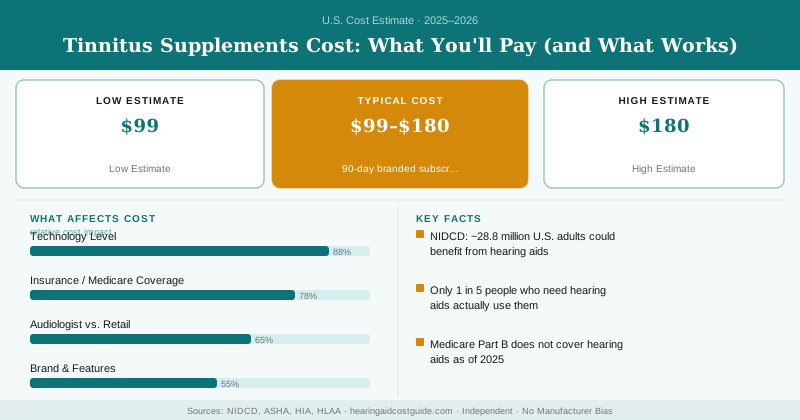
| 90-day branded subscription | $99–$180 | Same blends, locked-in billing |
So you’re looking at roughly $15 to $60 a month if you go the supplement route, and the fancier the marketing, the higher the price. The branded blends are usually just a mix of the single ingredients above, repackaged at a markup.
Why the Big Promises Don’t Hold Up
The NIDCD notes that most tinnitus has no single fixable cause, which is exactly why “miracle” pills sell so well — desperation is a great marketing target. A 2022 review of ginkgo biloba trials found no consistent benefit over placebo for tinnitus loudness. Zinc and B12 can help, but only in the small group of people who are genuinely deficient, and you’d want a blood test first rather than guessing.
Melatonin is the one with a reasonable case, and even then it’s indirect. It won’t quiet the ringing, but if tinnitus is wrecking your sleep, better sleep makes the tinnitus feel less intrusive. At $5 to $15 a month, it’s cheap enough to try.
No supplement is proven to cure tinnitus. If you want to experiment, buy single ingredients ($15–$25/month) rather than branded blends ($30–$60+), and skip auto-renewing subscriptions. Spend the saved money on an evaluation that can find a treatable cause.
Where Your Money Goes Further
Before spending months on pills, it’s worth knowing what an actual diagnostic path costs. A hearing test and an audiologist visit together usually run $150 to $300 and can uncover hearing loss driving the tinnitus — something supplements can’t touch. If hearing loss is present, hearing aids for tinnitus often reduce the perception far more effectively than any capsule.
For people whose tinnitus is more about distress than volume, evidence-backed options like tinnitus retraining therapy carry real clinical support. They cost more upfront, but you’re paying for something that works rather than refilling a bottle indefinitely.
Smart Ways to Spend Less
- Buy single ingredients. A $12 bottle of magnesium plus a $10 bottle of melatonin beats a $55 “proprietary blend” of the same things.
- Cancel the subscription. Most branded sellers default you into recurring 90-day shipments. One-time purchases are almost always cheaper.
- Get tested for deficiency first. Zinc and B12 only help if you’re low. A $40 blood panel can save you from buying supplements you don’t need.
- Don’t stack. Taking five products at once just multiplies cost without multiplying benefit.
When to Skip Supplements Entirely
If your tinnitus is pulsing in time with your heartbeat, one-sided, or recently sudden, that’s not a supplement situation — it’s a “see a doctor this week” situation. The same goes for tinnitus paired with dizziness or hearing loss. The full tinnitus treatment cost picture starts with ruling out causes a pill could never address.
The Bottom Line
You can spend $15 a month on supplements and feel like you’re doing something, but the honest math says that money buys more relief when it goes toward a proper evaluation and proven therapy. Try melatonin if sleep is the problem. Skip the $60 blends. And put the rest toward finding out what’s actually causing the noise in your ears.
Frequently Asked Questions
Tinnitus supplements typically cost between $15 and $60 per month, depending on the brand and formulation. Popular options like ginkgo biloba, zinc, and melatonin-based products fall within this range, with clinical strength formulations often reaching the higher end at $49.99 or more per bottle.
Most health insurance plans do not cover over-the-counter dietary supplements, including tinnitus relief products, as they are not FDA-approved medications. You will typically pay the full out-of-pocket cost at retail prices, though some flexible spending accounts (FSAs) or health savings accounts (HSAs) may allow you to use pre-tax dollars for supplement purchases if deemed medically necessary.
The American Tinnitus Association states that no dietary supplement has been proven to cure or reliably reduce tinnitus, despite marketing claims promising relief. Before spending $15-$60 monthly on supplements, consult an audiologist or ENT specialist about evidence-based treatments like hearing aids, sound therapy, or cognitive behavioral therapy, which have stronger clinical support.